2025
Tend
Empowering collective stewardship with computer vision
OVERVIEW
Tend connects UC Berkeley students and staff with campus environmental work through invasive plant identification and mapping.
ROLE
UI Designer
Experience Designer
TEAM
Isabella Fiorente
Ishani Juneja
TOOLS
Figma, Teachable Machine
User Interviews & Research
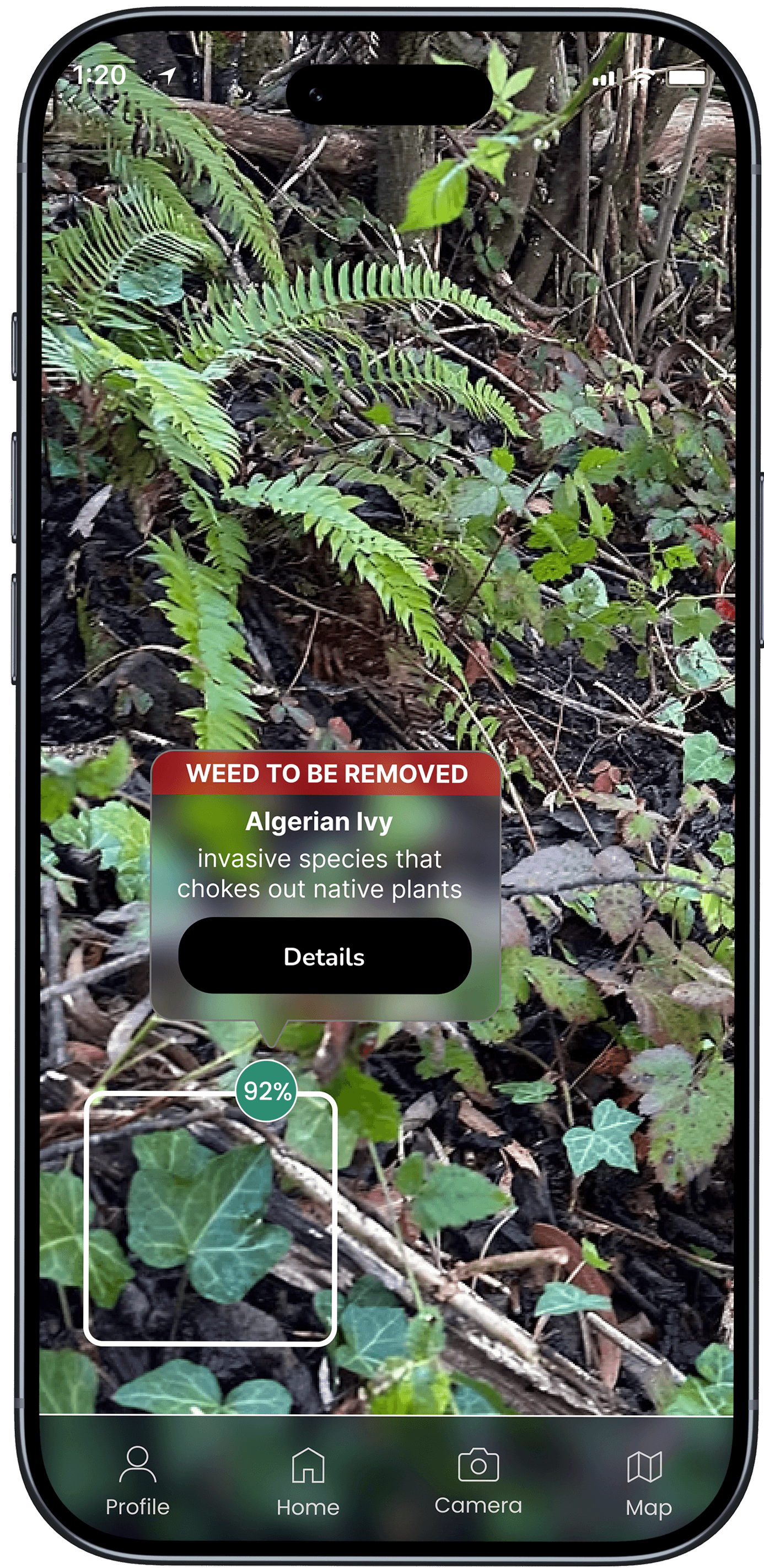
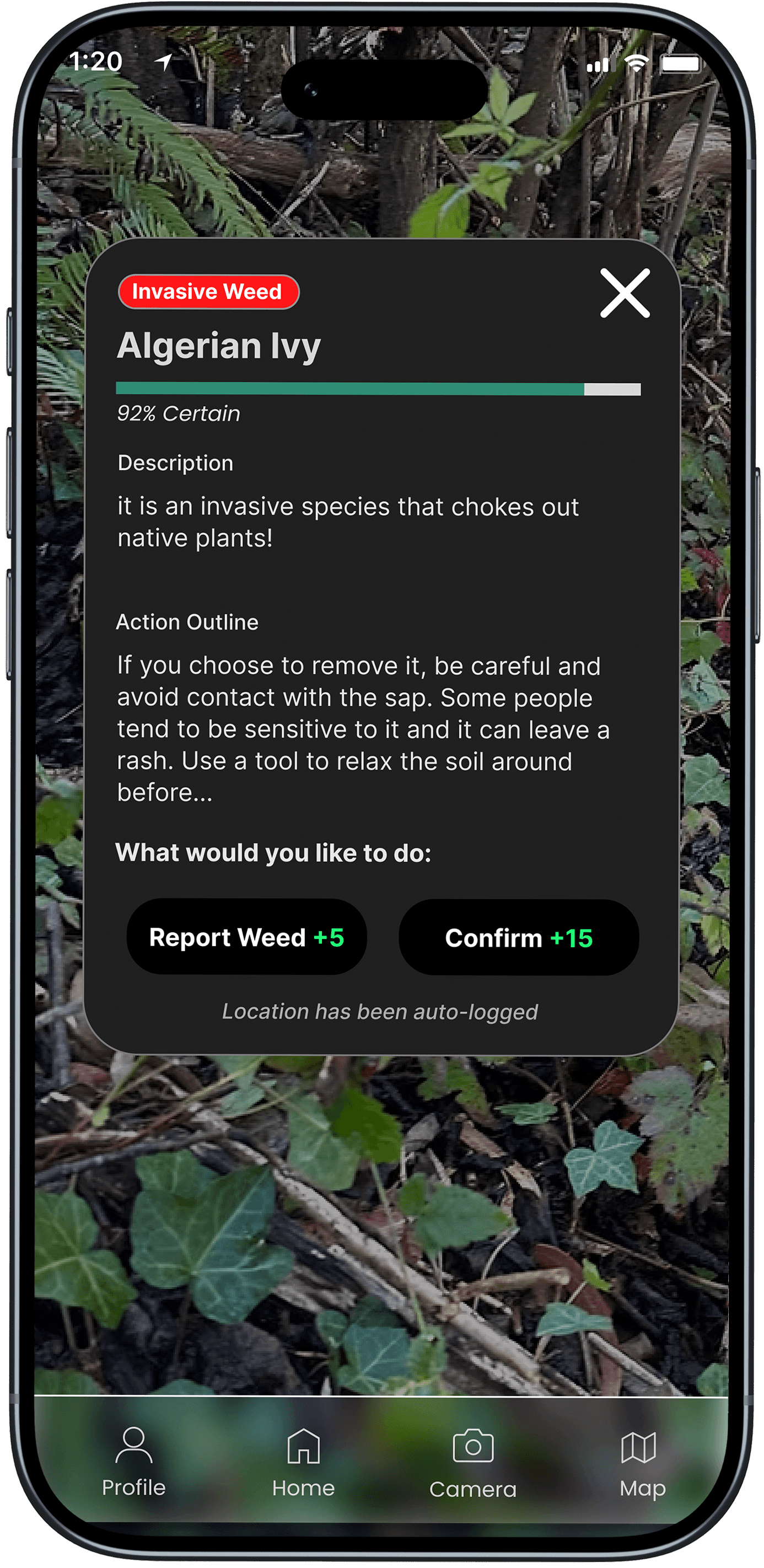
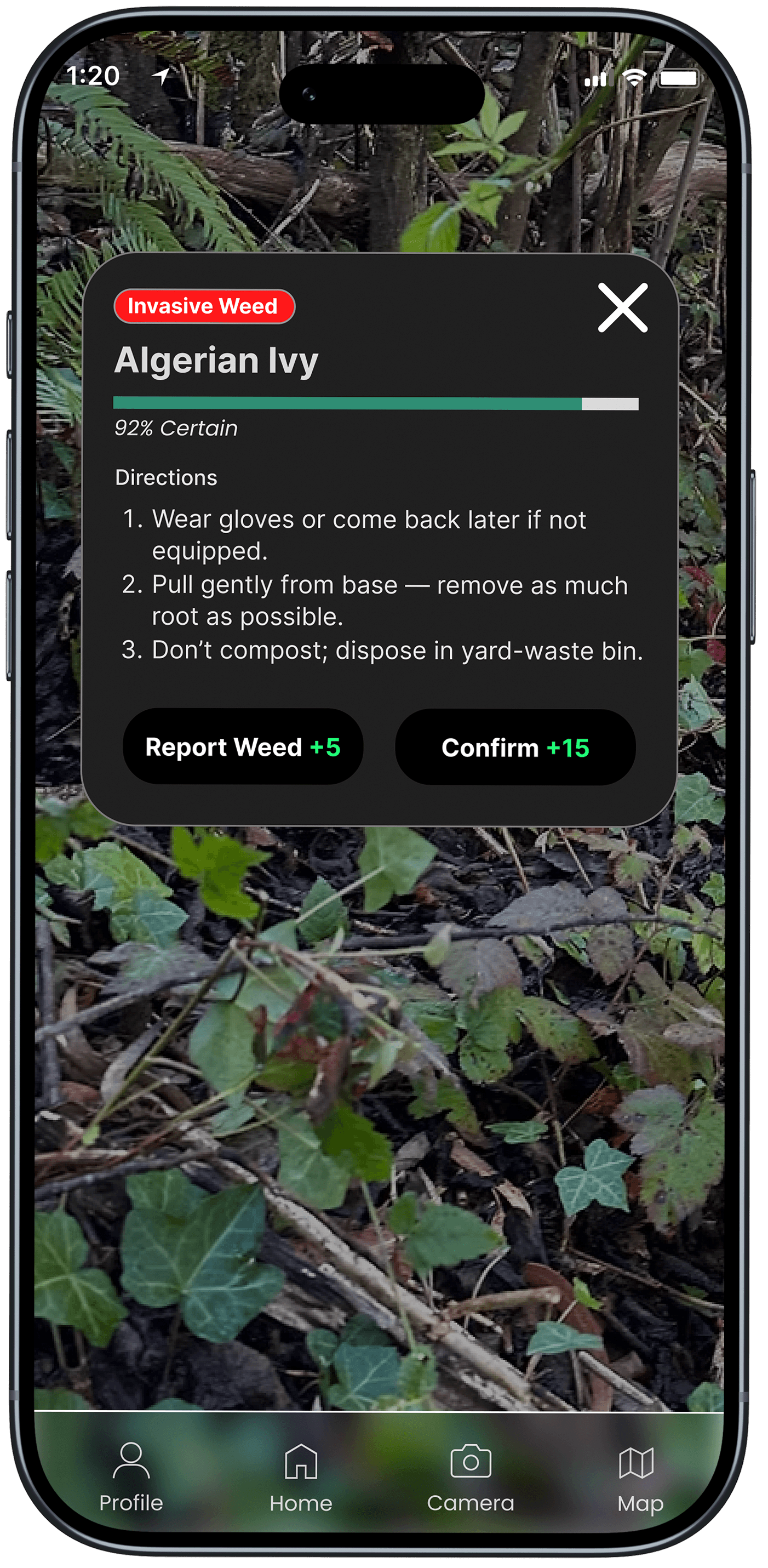
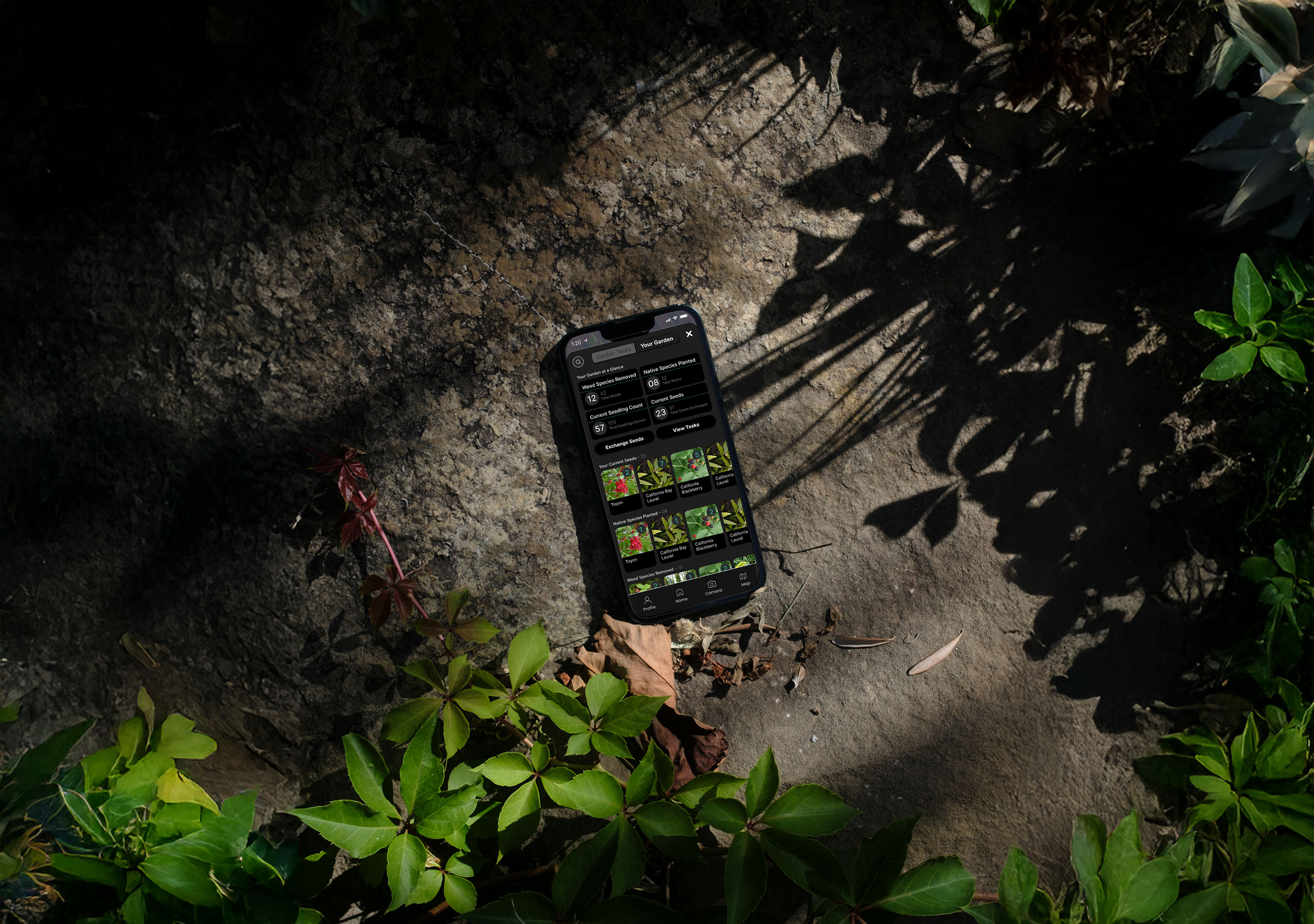
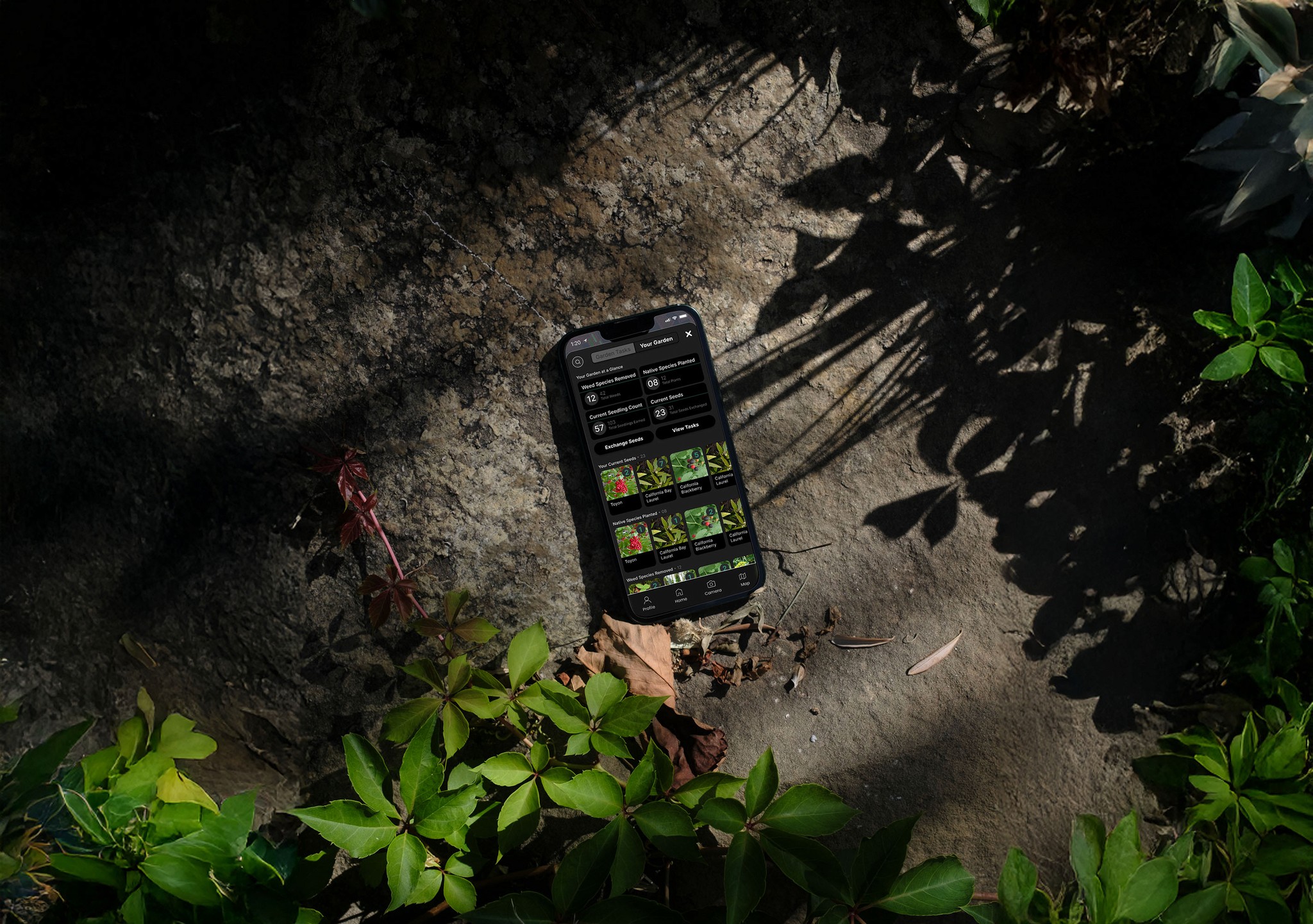
Students use their phone camera to identify invasive plants, earn points called "seedlings" for removing them, and exchange points for native plant seeds to plant in approved campus areas.
The app's core feature is identifying invasive plants and providing removal instructions.
To support this function we designed complimentary features including:
An Interactive map for tracking native and invasive flora, a reward system where points gained weeding are exchanged for seeds, and a dashboard to track activities and link to volunteer organizations.
CONTEXT
UC Berkeley sits within the Strawberry Creek watershed, a riparian corridor critical to San Francisco's East Bay ecology. Using crews of 20 - 25 groundskeepers to maintain this ecosystem, the University's Landscape Management Department protects biodiversity for the entire region.
The groundskeeping crews are, however, understaffed for this 178 acre task. Amongst their responsibilities of fire prevention, invasive species control, and habitat restoration, weeding invasive plants is a particularly difficult and labor intensive task.
UC Berkeley's ecological health is crucial to the biodiversity of the entire East Bay Region.
But its invasive plant removal needs more hands.
In fact, the state of California spends $82 million annually to map, monitor, and control invasive flora, highlighting the importance of this task.
PROBLEM SPACE
Groundskeepers need ongoing and coordinated help with weeding.
We conducted an initial interview with the departmental manager at the Landscape Services Office to survey the University's existing infrastructure. Through extensive discussion, we arrived at baseline understandings of the University's environmental management process. Some of these points were:
Campus volunteers need to know how and where to assist.
Weeding is the largest and most intensive aspect of maintaining the campus environment and ecology.
Student volunteers are helpful but ephemeral. Students graduate leaving vacancies that take time to fill.
Green Initiatives create a greater labor burden for groundskeepers.
USER INTERVIEWS AND RESEARCH
Over the next set of weeks, our team developed a working record of volunteer and environmental initiatives across the University campus. The institution's size of 45,000+ students accounted for the large breadth of involvement we found.
With over 40+ environmental student organizations and 16+ ecological labs and research institutes, the existing volunteer landscape included a diverse offering of public service efforts and a staggering depth of data collection and monitoring infrastructure.
40+ Environmental Initiatives, 16+ Research Labs and Institutes
We identified key staff within this ecosystem to engage.



Through continuous interviews with leadership at the Landscape Services Office and the Office of Environmental Health and Safety at UC Berkeley, we arrived at more detailed descriptions of the previously stated problem spaces. When asked to rank needs according to priority, the staff emphasized that ongoing and self-directed student volunteering is critical.
We interviewed 6 managers and departmental heads across these offices and 2 student organizers.
OPPORTUNITY AREA
Empower campus residents to provide continuous and informed support for groundskeepers.
Over 1740 students volunteer each semester from the institution's 45,000+ student population.
These are one-day events that place the mental load of coordination on landscape staff.
PROCESS
Using computer vision to enable independent volunteer action.
We trained a web-based ML model to identify invasive plants on the campus grounds. Though plant families are fairly distinguishable, it's important to differentiate plant species within the same family. We tested the model's reliability on a variety of invasive plants and established benchmarks for positive identification.
OUTCOME
Further prototyping produced a functional platform ready for usability testing with students and verification with groundskeeping staff.